After the Last Slide: Rehearsing the Question Slot as a Second Performance

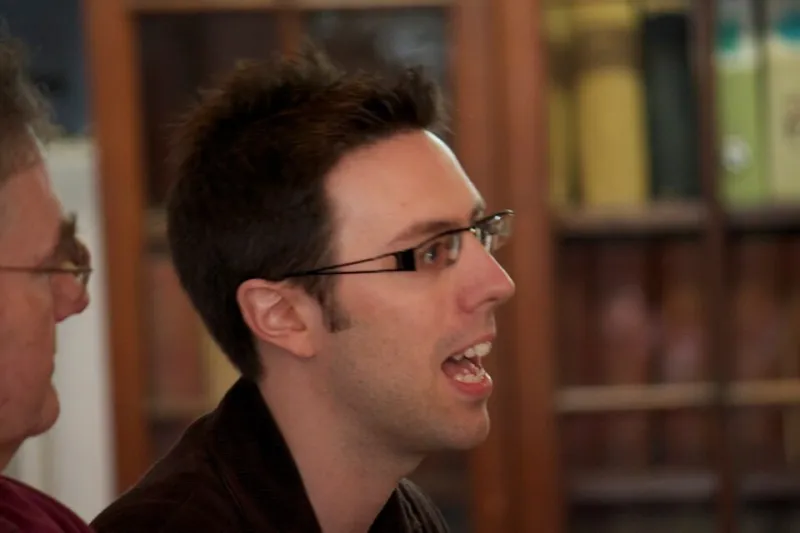
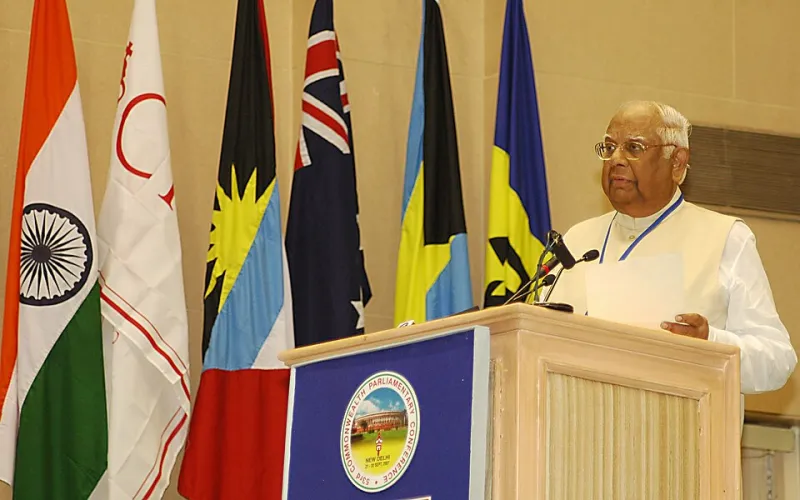
Photo: conference speaker answering audience question with chair and roving microphone in UK event room, via ragazzeonlyfans.com
The applause is not the end. It is the transition to a second, less scripted performance. The question slot tests a speaker's command of the material, their manners and their sense of the room. Yet in many UK conferences it remains the one part of the programme that nobody rehearses. The chair opens the floor, a hand goes up, and the speaker discovers in public whether they can think standing up.
The slot after the slot
Speakers rehearse the talk because the talk is visible. They time the opening, trim the middle, test the final slide. But the question slot has its own architecture: an invitation, a question, a pause, a response, a handover. Each part can be prepared. A speaker who has rehearsed only the monologue is like a host who has prepared dinner but not the greeting at the door.
The second performance is shorter, but it carries disproportionate weight. It is where audiences test whether the argument holds beyond the script. It is also where chairs discover whether the session has a shape beyond its final slide. Treating it as an afterthought is a quiet failure of stagecraft.
Rehearsal is not improvisation
Rehearsing questions is not about scripting answers. It is about preparing the conditions in which a good answer can emerge. A speaker can rehearse three bridges to the key message, two examples that bear repetition and one boundary sentence for questions that stray beyond their remit. They can practise the pause between question and answer, which is often more persuasive than speed. They can decide in advance how they will hand back to the chair.
Chairs can rehearse too. A chair who has prepared an opening instruction — one question each, please, and please state your name and organisation — sets a tone before the first hand rises. A chair who has agreed a closing line with the speaker can end the slot without the awkward drift that follows an unanswered request for a final question.
Handling the hostile question
Hostility rarely arrives as a clean challenge. It comes as a loaded premise, a speech disguised as a question or a complaint about something the speaker said ten minutes ago. The first task is to distinguish the question from the tone. A speaker who matches heat with heat gives the hostility a second life.
A useful sequence is: acknowledge, answer the answerable part, decline the unanswerable part, return to the room. Acknowledging does not mean agreeing. It means showing that the question has been heard. Answering the answerable part demonstrates command. Declining the unanswerable part should be explicit but calm: that is outside the scope of this session, or I do not have the evidence to answer that properly. Returning to the room prevents the exchange becoming a private argument.
Sarcasm is a poor tool in this setting. So is the phrase with respect, which now signals its opposite. A measured sentence and a steady pace are more authoritative than a clever retort.
Bridging without evasion
Bridging is a technique, not a dodge. It allows a speaker to move from a question they cannot fully answer to a message they can substantiate. The bridge should be audible and honest: that touches on funding; the part I can speak to is how the service is delivered. Or: I cannot comment on the consultation, but I can say what the evidence showed.
A bridge fails when it ignores the question entirely. Audiences in UK conference rooms are quick to notice the difference between a speaker who reframes and one who retreats. The bridge should carry something of the original question with it, even if only its theme.
Time as a shared resource
The question slot is where conferences overrun. One long question, one long answer and the next session is late. Time is a shared resource, and the chair is its steward. Agree at the start how long the slot will last. Take two or three questions rather than every question. Use a visible timer or a countdown card. If the room is large, use a roving microphone and a runner so that the discussion does not contract to the front row.
A useful formula is: we have time for two more questions, and I will take one written question as we close. This is not a dismissal. It is a shape. Speakers can also rehearse a short answer that respects the clock: a direct response, one piece of evidence and a signpost to further detail.
Keeping the room included
Questions from the floor favour the confident and the near-microphone. A speaker who wants a genuine second performance should ask the chair to invite written questions, repeat questions for recording and hearing loops, and watch the room rather than only the raised hand. Inclusion here is not a procedural nicety. It changes the quality of the questions.
Speakers should also notice who is not asking. A chair can invite a perspective from a different part of the room or from a group that has been quiet. This requires care, not tokenism. The aim is a wider conversation, not a performance of consultation.
What chairs can do
Chairs are not neutral. They set expectations, group questions, protect the speaker from monopolies and protect the audience from evasion. A chair who says we will take questions in the order raised, and we will keep them brief does more for the session than a chair who simply says over to you.
The chair should also prepare a closing line. The question slot needs an ending, not just an exhaustion of hands. A sentence that returns to the session's theme and thanks the room gives the second performance a finish.
A second speech worth preparing
Preparation restores agency. A speaker who has rehearsed the question slot is less likely to be ambushed by it and more likely to use it well. The audience sees not merely a person with slides but a person who can think in public. In the formal setting of a UK conference, that is still one of the most persuasive things a speaker can demonstrate.