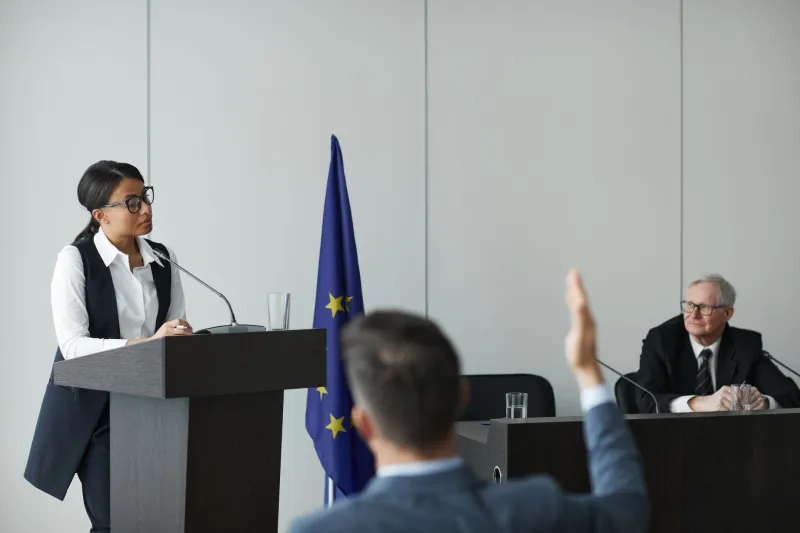
No Fee Is Not No Cost: A Fair Framework for Complimentary UK Speaking Invitations
Photo: James Forrester, CC BY 2.0, via Wikimedia Commons
The phrase complimentary invitation sounds generous. It suggests a door held open, a platform offered and a relationship begun. In practice, a no-fee speaking slot is rarely costless. For a UK speaker, it may involve days of preparation, rail fares, an overnight stay, accessibility arrangements, childcare or care responsibilities, and the quieter cost of turning down paid work. For a host organisation, it may involve venue space, staff time and reputational risk. None of these costs disappear because no invoice changes hands. In 2026, with budgets under scrutiny across the public, charitable and private sectors, the fairest invitations are those that name the exchange openly.
The name Free Speakers speaks to access, not to invisibility. A free platform can be valuable, especially for newer voices, community groups and causes that could not otherwise afford a professional speaker. But the word free should describe the terms of the invitation, not conceal the terms of the work. The difference matters to both sides.
The invitation is not the whole ask
When an organisation asks someone to speak without a fee, it is usually asking for more than the hour on stage. It is asking for preparation, travel, availability, expertise and often a degree of reputational lending. A speaker may need to read background papers, refine a talk for a particular audience, join a briefing call, test slides and arrive early for a sound check. For a freelance consultant, a charity adviser or a self-employed trainer, that time has a market value even when it is donated.
The hidden costs are practical as well as financial. A morning session may require an unpaid half-day away from client work. An evening event may mean a taxi home after the last train. A regional venue may be reachable only by car, with parking and congestion charges to consider. A speaker with a disability may need a step-free route, a quieter arrival point or an accessible hotel. A speaker with caring responsibilities may need to arrange cover for children or an elderly relative. These are not peripheral details. They are part of the invitation.
Three honest models of no-fee speaking
Not every complimentary slot is the same. Hosts and speakers are better served by naming the model in use.
- No fee, expenses covered. The speaker donates their time and expertise; the host reimburses agreed direct costs. This is the clearest form of complimentary invitation and is common in the charity and public sectors.
- Modest honorarium. A small payment recognises preparation and lost earnings without pretending to be a full commercial fee. It can be appropriate for community events, early-career speakers or organisations with limited but real budgets.
- Fee waived for mission fit. The speaker chooses to waive a fee because the cause, audience or learning opportunity matters to them. Even here, expenses, access needs and content rights should be agreed in advance.
Each model can be fair. What makes an invitation unfair is ambiguity, not the absence of a fee. A large organisation with a healthy events budget should not describe a paid platform as an exposure opportunity. A small charity should not promise expenses it cannot reimburse. Honesty about budget is part of respect.
A framework to agree before the date is booked
A short written summary is usually enough. It need not be a legal contract, but it should answer the questions that otherwise surface at the worst possible moment.
- Purpose and audience. What is the session for, who will be in the room and what does the host expect the speaker to contribute beyond the talk?
- Time and preparation. How long is the slot, when is the speaker needed on site and what preparation is expected? Include briefing calls, rehearsals and any social or networking obligations.
- Expenses. Which costs will be reimbursed, at what rate and by when? State whether travel must be booked in advance, whether receipts are required and whether overnight accommodation is available.
- Access and care. Ask what the speaker needs to participate fully. This may include step-free access, captions, a hearing loop, a quiet room, dietary requirements or a schedule that allows for caring responsibilities.
- Recording and reuse. Will the session be filmed, streamed or circulated afterwards? For how long, on which channels and with what consent? A complimentary appearance should not become indefinite commercial content by default.
- Cancellation and change. What happens if the event moves, shrinks or is cancelled? Who covers non-refundable travel? Clear expectations protect both host and speaker.
Expenses are part of the invitation, not a perk
UK travel costs deserve particular attention. Advance rail fares can be reasonable, but flexible tickets bought late are not. Evening events may end after the last convenient train, making an overnight stay the practical choice. Venues outside city centres may depend on taxis or cars. London events may involve congestion charges and expensive parking. Accessibility can add cost: a longer taxi journey because a station is not step-free, or an interpreter booked for the session.
Hosts should publish a simple expenses policy and say plainly what they will cover. Speakers should ask for it before accepting. Neither request is unreasonable. An expense process that takes months to reimburse is also a cost, especially for individuals who are not backed by a large employer.
Support is not a favour
A speaker who is rushed, unsupported or out of pocket is less likely to give a polished session. The support that makes a complimentary slot work is often modest: a clear briefing, a named contact, a sensible arrival time, a quiet place to collect thoughts and a stage that is accessible. A host who provides these things is not doing the speaker a favour. They are designing the conditions for a good event.
Free Speakers exists in the space between voices and stages. That space works best when both sides can see the same terms. The free in Free Speakers should mean access to ideas, not a assumption that the people carrying those ideas should absorb every cost.
When free is fair
A complimentary invitation is fair when it is transparent, mutually understood and supported in practice. It is fair when the host covers agreed expenses, respects access needs, is clear about recording and does not treat the speaker as free labour. It is fair when the speaker can decline without penalty and can ask questions without embarrassment.
It is less fair when a well-resourced organisation offers exposure instead of expenses, when costs are discovered late, or when a recording is reused beyond what was agreed. Those practices damage trust and narrow the range of voices willing to take part.
No fee is not no cost. It is a decision about who carries which cost, and why. UK organisations that make that decision openly will attract better sessions, stronger relationships and a wider range of speakers. Speakers who ask the same questions will find it easier to say yes with confidence, or no without apology.