Access Before Applause: Auditing the Speaker Route Through a UK Venue
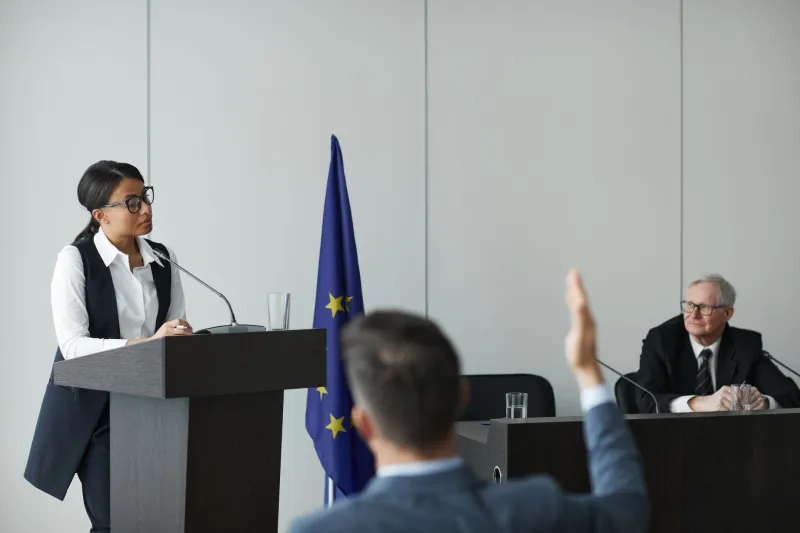
Accessibility is often treated as a matter for the day itself: a ramp produced at short notice, a microphone swapped, a route improvised. For speakers, however, the venue is a workplace before it is a stage. The journey from pavement to lectern, the height of the platform, the reach of the microphone and the clarity of the room all shape whether a speaker can do the job they were invited to do. A speaker platform accessibility audit is therefore not an add-on to venue selection. It is part of deciding whether a venue can host the programme at all.
The speaker route is part of the venue
Most venue accessibility information is written for audiences. It describes the main entrance, the auditorium seating and the location of accessible toilets. Useful as that is, it rarely answers the questions a speaker needs answered. Can the platform be reached without steps? Is the backstage route wide enough for a wheelchair, a guide dog or a frame? Is there a quiet space before a session? Can the lectern be lowered, or removed altogether? Does the microphone reach a speaker who cannot stand for long periods?
These are practical questions, but they are also questions of programme quality. A speaker who arrives flustered after negotiating a service corridor is less likely to give a confident performance. A speaker who cannot see the audience because stage lighting is poorly adjusted will struggle to judge the room. An accessible venue is usually a more forgiving venue: for late arrivals, temporary injuries, pregnancy, fatigue and the ordinary variation of human bodies.
Start with the invitation, not the site visit
The invitation is the first audit point. UK organisers should ask, early and confidentially, whether a speaker has access requirements and offer a named contact for that conversation. The question should not be phrased as an invitation to solve the venue’s problems. It should signal that the organiser expects to make adjustments and will take responsibility for doing so.
At the same time, organisers should not rely solely on speakers to disclose needs. Many people will not, particularly if they have had poor experiences elsewhere. The venue audit should establish what the building can support before invitations are confirmed. If a speaker later identifies a requirement, the organiser should already know whether the venue can meet it or whether an alternative room, platform or format is needed.
Five zones to inspect
A useful audit moves through the venue in the order a speaker will experience it.
Arrival and registration. Check the drop-off point, the level entrance and the distance to reception. Confirm door widths, lift dimensions and whether the route is signed clearly. A step-free route that depends on a staff member being available is not the same as an independent route.
Backstage and waiting. The green room, access to the stage and the location of accessible toilets should all be checked. For larger events, consider whether there is a quiet room where a speaker can prepare or recover. Historic UK venues can be generous in atmosphere and tight in corridor width; both facts matter.
Platform and lectern. Ask about ramp gradient, edge protection and handrails. Check whether the lectern is height-adjustable and whether there is clear floor space beside it. Cable management is an access issue as well as a safety one. A chair or stool should be available without the speaker having to request it in front of an audience.
Sightlines and presentation. The speaker should be able to see the audience, and the audience should be able to see the speaker. Check screen height, confidence monitors and lighting. Stage lights that shine into the speaker’s eyes or leave them in silhouette can make communication harder for everyone, and especially for speakers who rely on lip-reading or visual cues.
Sound and hearing. Confirm microphone reach, spare batteries and the difference between handheld, lapel and lectern microphones. A hearing loop, or induction loop, should be tested in the areas where it is claimed to work. If British Sign Language interpreters are part of the programme, check their sightlines from the audience and from the stage. Questions from the floor need roving microphones, not a reliance on raised voices.
Questions to put to the venue
A concise written request will usually produce clearer answers than a general enquiry about accessibility. Organisers may wish to ask:
- Can you provide a plan showing the step-free route from the main entrance to the stage and backstage areas?
- What is the gradient of the platform ramp, and is there edge protection?
- Is the lectern height-adjustable, and can it be removed if required?
- Which microphones are available, and can the sound team test them with the actual speaker before the session?
- Where is the hearing loop installed, and when was it last tested?
- Can stage lighting be adjusted to avoid glare and silhouettes?
- Is there a quiet space available to speakers before and after their sessions?
- Who is the named venue contact on the day, and what is their contact number?
Build the findings into the programme
The audit should influence decisions while there is still time to act. If a venue cannot provide step-free access to a particular platform, the programme may need a different room or a floor-level format. If the hearing loop is unreliable, the budget may need to include additional support. If the lectern is fixed, the session design should not assume every speaker will stand behind it.
For 2026 and early 2027 programmes, organisers should record access arrangements in the speaker agreement and in the production schedule. A site visit with the sound technician, the venue contact and, where possible, someone with lived experience of access barriers will reveal more than a brochure. The aim is not to create a separate accessibility stream. It is to make the main programme deliverable for the speakers who have been invited to deliver it.
Access before applause is ultimately a matter of respect and foresight. The best time to discover that the platform cannot be reached is before the speaker is booked, not when the room is filling and the first slide is waiting.