The Shared Sightline: Making British Sign Language Interpretation Part of the Stage Plan

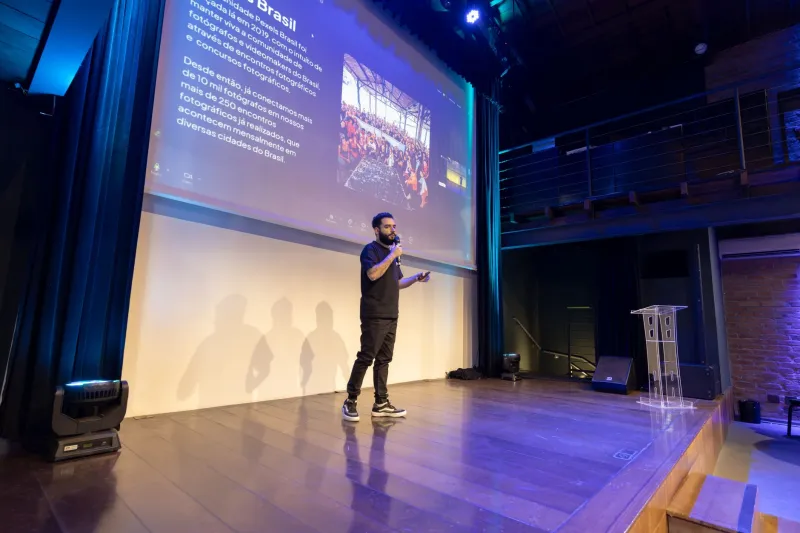
Photo: Lucy Southwell, CC BY-SA 4.0, via Wikimedia Commons
A conference stage rarely has only one voice. There is the speaker, the audience and, when British Sign Language interpretation is present, a third participant whose work is visible, precise and inseparable from the talk itself. Yet interpretation is still too often arranged late, seated at the edge of the plan and treated as an access addition rather than a component of the performance. That approach shortchanges everyone in the room.
Good interpretation is not a parallel service running quietly beside the event. It is part of how the event communicates. The interpreter reads meaning, tone and intent in real time, and the speaker’s choices either support that work or make it harder. For UK organisers and speakers, the practical question is therefore not simply whether a BSL interpreter has been booked. It is whether the room, the running order and the speaker’s habits have been designed to let interpretation succeed.
The third voice is a stage presence
A BSL interpreter is not a disembodied caption. They occupy space, hold attention and need to be seen clearly by the audience for whom they are interpreting. Their presence also affects how the speaker is watched. Some audience members will divide attention between speaker and interpreter; others will rely almost entirely on the interpreter. The stage plan should acknowledge that reality rather than pretending the interpreter can be tucked into a corner without consequence.
This is why interpretation belongs in the same conversation as lighting, seating and screen content. If the interpreter is placed in shadow, half-hidden by a lectern or asked to work from a position where the speaker’s slides obscure their hands, the access provision is technically present but practically compromised. The audience notices. The interpreter certainly notices. The speaker may not, until the session is already under way.
Sightlines before stagecraft
The first task is to establish a clear line of sight from the interpreter to the deaf audience members and from those audience members back to the interpreter. This sounds obvious, but it is easily lost when a venue supplies a standard layout and a stage manager works from a generic plan. The interpreter should be positioned where they can see the speaker, the slides and the audience, and where the audience can see them without twisting or straining.
Speakers should also be briefed on movement. Walking the stage is not forbidden, but sudden turns away from the interpreter, speaking with a hand over the mouth or standing directly in front of the interpreter’s working space all create avoidable disruption. A simple rule helps: if the speaker wants to move, move with awareness. The interpreter needs the speaker’s face, rhythm and intention, not a fixed spot on the floor.
Lighting deserves equal attention. Interpreters need even, flattering light on the face and hands, without glare from behind or a pool of darkness at the front of the stage. If the event is being filmed, the camera plan should include the interpreter rather than cropping them out of the frame. The interpreter is part of the session, and the recording should reflect that.
Pacing is a shared discipline
Spoken English and BSL do not map word for word. Interpretation involves choices, compression and the occasional need to wait for a sentence to resolve before its meaning can be conveyed. Speakers who race, read long passages verbatim or change direction mid-sentence make that work considerably harder.
A steadier pace is not a slower pace. It is a clearer one. Speakers should aim for complete thoughts, natural pauses and deliberate transitions. When reading from a script, they should provide the text in advance where possible and avoid galloping through dense paragraphs. When using numbers, names, acronyms or specialist terms, they should slow slightly and, where appropriate, show the term on screen as well as saying it.
Humour requires particular care. A joke that depends on a rapid aside, a pun or a cultural reference may not land in interpretation, and that is not a failure of the interpreter. Speakers can help by keeping humour structural rather than verbal: a well-placed pause, a clear change of tone or a self-contained anecdote travels better than a throwaway line delivered at speed. The aim is not to flatten the speaker’s personality, but to give the interpreter enough room to carry it.
Cueing the handover
In a session with interpretation, cueing becomes a practical language of its own. The speaker and interpreter should agree early on how questions will be handled, how names will be introduced and how the speaker will signal a change of section. A small gesture, a phrase such as “I’ll pause there”, or a glance towards the interpreter can be enough, provided it has been agreed beforehand.
The question slot needs its own plan. Audience members may ask questions in BSL, in spoken English or through a mixture of both. The chair should know how to recognise a question in BSL, how to allow time for interpretation and how to prevent the room from talking over the interpretation. If a question is long or complex, the chair may need to summarise it back before the speaker responds. That is not an interruption; it is good chairing.
Speakers should also resist the urge to fill every silence. Interpretation sometimes requires a brief pause, and a speaker who rushes into that gap can split the audience’s attention. A composed pause is part of the delivery, not a failure of it.
The briefing that makes the difference
A short pre-session briefing is one of the most useful investments an organiser can make. It need not be elaborate. The interpreter needs the running order, the speaker’s name and pronouns, the subject matter, any specialist vocabulary and a sense of the tone: formal, conversational, celebratory or contentious. The speaker needs to know where the interpreter will stand, how questions will work and what signals will be used.
The briefing should also cover practical contingencies. What happens if the speaker runs over? What happens if a slide fails? What happens if an audience member speaks from the back of the room without a microphone? A brief conversation about these scenarios prevents the interpreter from being forced to improvise around problems that could have been anticipated.
A checklist for organisers
- Confirm the interpreter’s position in the room and check sightlines from the audience.
- Include the interpreter in lighting and camera plans.
- Share the running order, speaker notes and specialist vocabulary in advance.
- Brief the chair on questions asked in BSL and on protecting interpretation time.
- Ensure the green room and stage route are accessible and clearly explained.
- Agree a contact person who can resolve staging issues on the day.
A checklist for speakers
- Provide slides, scripts and key terms before the session where possible.
- Speak in complete thoughts and use deliberate pauses.
- Avoid covering your mouth, turning away mid-sentence or walking in front of the interpreter.
- Agree cueing for section changes and question handling.
- Slow down for names, numbers and acronyms.
- Treat the interpreter as a colleague on stage, not a piece of equipment at the side.
Interpretation is at its best when it is invisible as a process and unmistakable as a presence. The audience should feel the talk, not the mechanics. That happens when organisers plan the room properly and speakers accept that the third voice is part of the performance. In UK conference rooms, that is not a niche concern. It is a mark of stagecraft.