Visibility Is Part of the Programme: Briefing UK Venues on Speaker Lighting
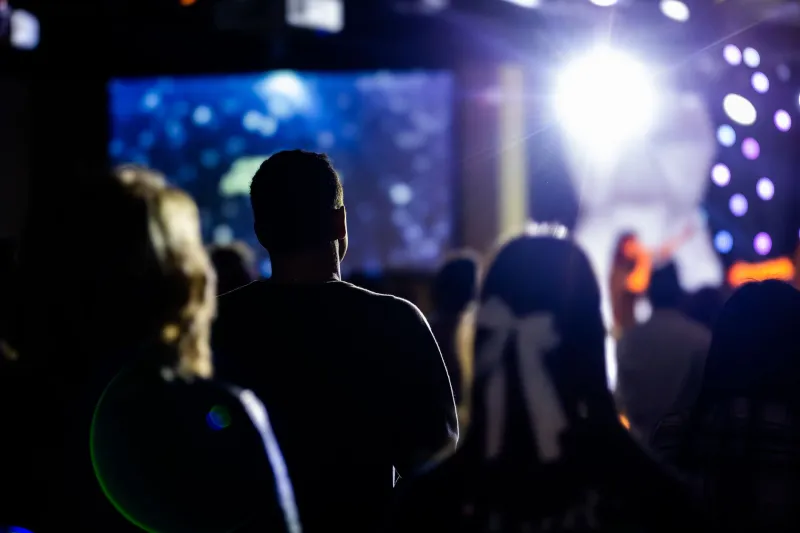
At many UK conferences, lighting is discussed last. The programme is settled, the slides are polished, the room is dressed and the speaker has rehearsed. Then, somewhere between the final coffee break and the opening remarks, someone asks the AV team to bring the house lights down. The room darkens, the screen brightens, and the person at the front becomes harder to see.
That sequence is common, but it is not inevitable. Speaker lighting is not simply a matter of atmosphere. It is part of how a presentation communicates. If the audience cannot read a speaker's face, follow a gesture or see where the argument is going, the session loses a channel of meaning. For organisations that invite speakers, lighting deserves a place in the brief alongside timings, travel and slide deadlines.
Why speaker lighting belongs in the programme
A conference stage is a working environment. The speaker is not a decorative element placed in front of a screen; they are the primary means by which ideas reach the room. Good lighting supports attention. It allows people at the back to see expression and movement. It helps anyone relying on lip-reading or visual cues. It also keeps recorded and streamed sessions watchable, which matters increasingly to UK events that publish material after the day itself.
Yet lighting is often treated as a venue matter rather than a programme matter. That division creates gaps. The organiser knows what the speaker needs to do. The AV team knows what the rig can do. Unless someone translates between the two, the default setting wins: a dark room, a bright screen and a speaker who is either overexposed at the lectern or lost against the backdrop.
Four failures that recur
The dark stage
Dimming the room for slides is a familiar habit. It can improve screen contrast, but it can also remove the speaker from view. A single pool of light at the lectern is not enough if the speaker steps away from it. The practical answer is not to flood the whole room. It is to light the speaker's face and front from the audience side, while keeping the screen readable.
Projector wash
The screen is bright; the speaker is lit by spill from it. The result is flat, slightly blue light that makes faces look tired and gestures hard to read. Projector wash is especially common in hotel suites and temporary conference spaces where the rig is minimal. Ask for front light that is separate from the screen and adjusted once the slides are running, not before.
The lectern spot
A narrow, hot spot can make a speaker look isolated and uncomfortable. It may bleach the forehead, leave the eyes in shadow and cast hard shapes on the backdrop. Many speakers move away from the lectern, which leaves the spot pointing at empty space. A softer, wider field is usually more useful than a tightly focused beam.
The disappearing speaker
Some sessions begin with the room lights low and never bring them back. If the speaker moves from a video clip to a live explanation, the audience may be listening to a voice in the dark. Transitions need cues. Someone should know when the lighting changes and why. A simple instruction such as 'restore speaker light after the film' is more useful than a general request for good lighting.
A plain-English brief for the AV team
Lighting briefs often fail because they use technical language without a shared meaning. A one-page brief in plain English is more likely to survive the handover between venue, contractor and organiser. It might say:
- We need the speaker's face evenly lit from the front, so the audience can see expression and gesture.
- The speaker should remain visible when the screen is showing a bright slide.
- Please avoid a narrow spot that leaves the eyes in shadow or creates glare on the screen.
- The lighting should work for both the lectern and a standing position to the side.
- We need a clear cue for dimming and restoring light during any video or slide sequence.
- If the event is filmed or streamed, please check the speaker's face on camera as well as in the room.
This is not a request for spectacle. It is a request for visibility. The wording gives the AV team something to test and gives the organiser something to check.
A pre-event checklist
Before the doors open, walk the room at the lighting levels the audience will experience. Stand at the back and at the sides. Ask a colleague to stand where the speaker will stand. Check the face, not just the stage. Then check the screen and the speaker together. A slide that looks fine on its own may wash out the person beside it.
Confirm the standing positions. Speakers often arrive with a plan to move, but the lighting may only cover one spot. Confirm the lectern height, the screen position and the distance to the first row. If the event is recorded, ask to see the camera feed. If the room has windows, ask what happens when daylight changes. In November, a late-afternoon session can move from grey light to darkness while the speaker is still talking.
Finally, name a contact. The brief should say who can adjust the lighting during the event and how that person can be reached. This is a small point, but it prevents the familiar scene in which everyone agrees the lighting is wrong and no one knows who controls it.
Lighting as stagecraft
For UK organisations commissioning speakers, the useful question is not whether the room looks dramatic. It is whether the speaker can be seen and understood. A clear lighting brief takes ten minutes to write and can be checked in a short rehearsal. It belongs in the run of show, not in the margin. When the room goes dark, the speaker should not disappear with it. Visibility is part of the programme.