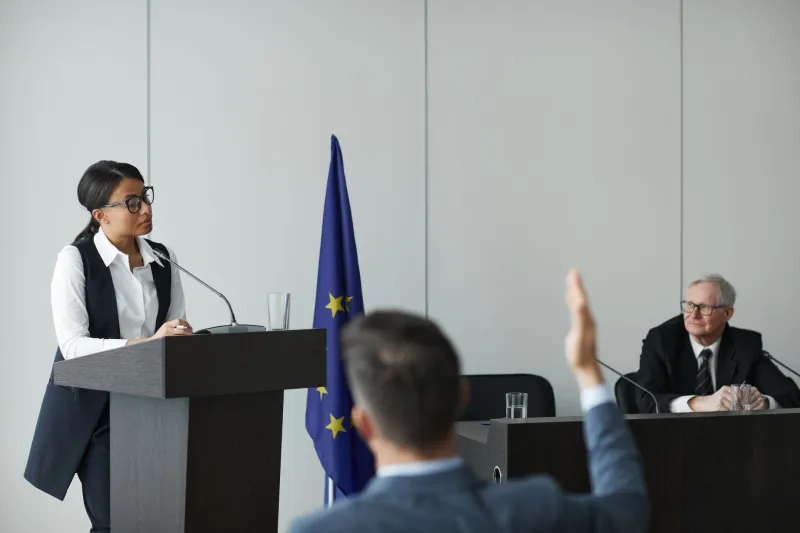
Quiet Before the Question: Establishing Green-Room Terms That Protect the Talk
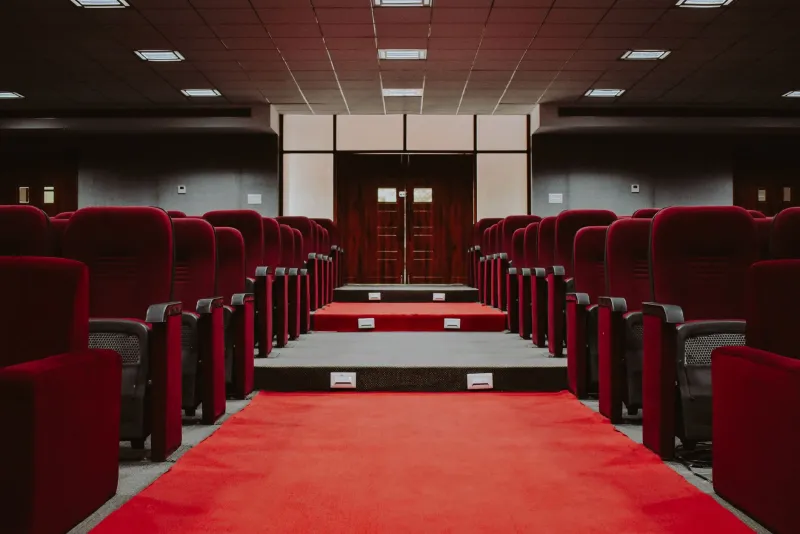
The green room has an identity problem. In many UK venues it is treated as a holding pen: a place to park a speaker until the programme requires them, furnished with a kettle and a stack of chairs, positioned wherever there happens to be space. That arrangement suits the building. It does not always suit the work.
For the speaker, the hour before a session is not a lull. It is a period of consolidation: checking the shape of an argument, settling the voice, reviewing names and numbers, deciding what to leave out. The quality of that hour has a direct bearing on the first minute of the talk. Organisers who treat the green room as a workplace, rather than a courtesy, are not indulging speakers; they are protecting the session.
The Room's Purpose Is Concentration
A green room is not a VIP lounge and not a second reception area. Its primary purpose is concentration. That distinction matters when rooms are allocated, when access is controlled and when hospitality is planned. If the space is shared with sponsors, exhibitors or late-breaking meetings, the speaker has no reliable place to prepare.
UK venues often have a serviceable space that can be made fit for purpose with a little forethought: a meeting room away from the main thoroughfare, a quiet office, even a screened corner with a door that closes. The test is simple. Can a speaker rehearse a paragraph aloud without an audience? Can they take a call with a colleague without broadcasting it? Can they sit for ten minutes without being asked to move?
Quiet Is a Deliverable
Noise is the most common complaint about green rooms, and the easiest to address. Through-traffic is the usual culprit: a room situated between the catering point and the auditorium will be crossed constantly. Adjacent dishwashing, crate-dropping and furniture-moving are also familiar. So is the well-meant visit from a host who wants to 'see how you are doing' five minutes before the session.
Organisers can set expectations without being austere. A printed sign on the door, a named contact for queries, and a clear instruction that the room is closed to non-essential visitors during a stated preparation window will do most of the work. Hosts should agree in advance when they will brief the speaker and when they will leave them alone. The second part is as important as the first.
Access, Refreshments and the Practical Minimum
A green room should be reachable without a guided tour. Speakers arriving at a large venue need a route that is short, step-free where required, and not dependent on a member of staff being free to escort them. The same applies to toilets, exits and the route to the stage. Practical access is not an extra; it is part of the room's function.
Refreshments deserve more thought than a plate of biscuits. Water at room temperature is more useful than a single jug of iced water; caffeine close to a talk can unsettle a speaker who is already alert. Food should be timed so that it does not arrive during the final ten minutes of preparation. Dietary and cultural requirements should be gathered with the original briefing, not discovered on the day.
The Last-Minute Briefing Has a Time Limit
There is a difference between a final check and an ambush. A host may need to confirm pronunciation, running order, time signals or a change in the room layout. Those are legitimate. New slides, a revised brief or an unexpected panel member are not last-minute items; they are programme changes that require consent and time.
A useful convention is to agree a briefing window: perhaps twenty minutes before the session, with a named person and a written note of any changes. After that window, the speaker's preparation time is protected. If something genuinely cannot wait, the host should ask whether the speaker wishes to know now or after the talk. That single question prevents a great deal of unnecessary disruption.
The Speaker's Own Ritual Is Part of the Programme
Speakers also have a responsibility to make their needs known in advance. This is not a matter of demands; it is a matter of professional clarity. A speaker who needs twenty minutes of quiet, a particular chair, a printed copy of the running order or a chance to walk the stage should say so when accepting the invitation, not at the green-room door.
A short preparation ritual is worth protecting: a final read of the opening and closing lines, a glass of water, a check of the microphone if one is to be worn, and a moment to stand and breathe. It is unglamorous and effective. Organisers who understand it are less likely to fill the hour with small talk.
A Green-Room Charter for UK Venues and Hosts
Venues and hosts can adopt a short set of terms without bureaucracy. The following checklist covers the essentials.
- Name a single point of contact for the speaker and share the contact details in advance.
- Confirm the room's location, access route and opening time in writing.
- State the preparation window and protect it from non-essential visitors.
- Agree a briefing time and a cut-off after which only urgent changes are raised.
- Provide water, glasses and a quiet place to sit; time refreshments away from the final preparation period.
- Check step-free access, toilet location and secure storage for bags and coats.
- Confirm the route to the stage and whether a technician will be available for a microphone check.
- Ask the speaker, in advance, whether they have any preparation requirements.
None of these items is extravagant. Together they turn a holding pen into a workplace.
When Terms Cannot Be Met
Not every UK venue has a spare room. In that case, honesty is better than improvisation. A speaker can be offered a quiet corner, a nearby café, a car or a colleague's office, provided the alternative is agreed in advance and the speaker knows where to go. What undermines confidence is not a modest room; it is an unspoken expectation that the speaker will manage.
The green room is a small part of the programme on paper. In practice, it is where the talk begins. Clear terms for quiet, access, refreshments and briefing protect concentration, reduce avoidable stress and help sessions start well. At Free Speakers, we would rather see a plainly furnished room with a closed door than a generous space with no terms at all.